
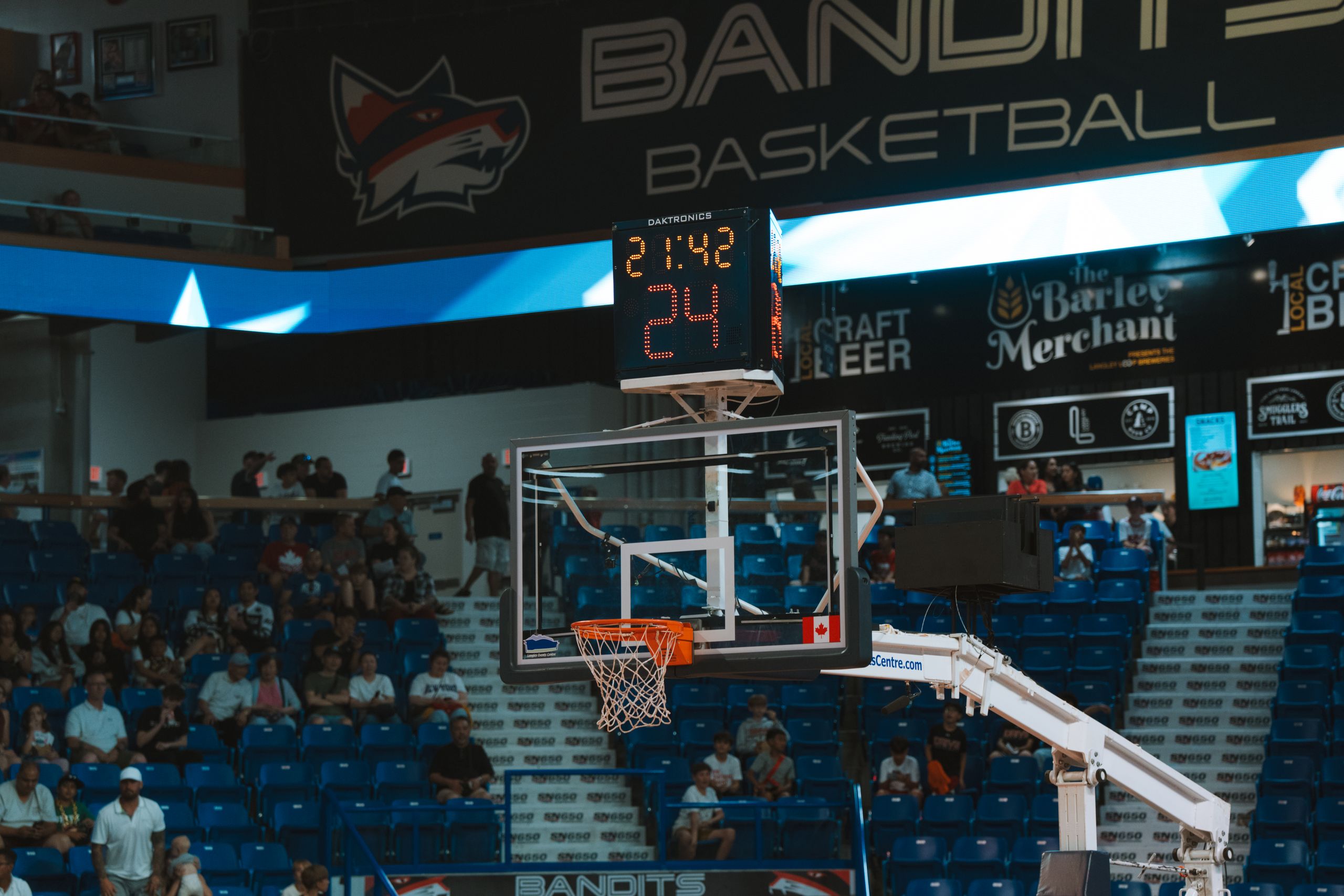
What Is the Shot Clock in Basketball?
The 30-second answer
The shot clock gives the offense a fixed number of seconds to attempt a shot= 24 in the NBA, 30 in men’s college ball. If they don’t get a shot off that hits the rim in time, it’s a violation and the other team gets the ball. It exists for one reason: to stop teams from holding the ball forever to protect a lead.
The slightly longer version
Before 1954, NBA teams could literally just stand there holding the ball once they were ahead and one infamous game ended 19–18. The 24-second clock was invented to force action, and it worked: it created the fast, flowing game you see today.
The clock resets to full whenever the ball hits the rim, the defense takes possession, or there’s a stoppage like a foul. One wrinkle: in the NBA, an offensive rebound only resets it to 14 seconds, not 24 so second chances come with a shorter fuse. And the shot just has to leave the shooter’s hands before zero; it can still be in the air when the buzzer sounds.
What to watch for:
- The clock dipping under 5 seconds is when the offense has to force something up, good shot or not. Desperation heaves live here.
- After an offensive rebound, glance at the reset: 14 seconds in the NBA, not 24. Less time than it looks like.
- End-of-quarter half-court launches where nobody’s showing off, they’re just beating the buzzer. If it goes in, it counts.
- The “shot clock violation” call if the ball never touched the rim in time. Instant turnover, and the crowd always groans.
Say this out loud
“Clock’s at three somebody’s got to put it up!”