What Is Offside in Soccer?
The 30-second answer
A player is offside if they’re closer to the opponent’s goal than the ball and the second-to-last defender when a teammate plays the ball to them. In plain terms: you can’t loiter by the other team’s goal waiting for a pass. The rule forces attackers to time their runs instead of cherry-picking.
The slightly longer version
It’s judged at the moment the ball is kicked, not when it’s received that’s the part everyone gets wrong. A striker can sprint past the whole defense legally, as long as they were level with (or behind) the second-to-last opponent when their teammate struck the pass. The “second-to-last” is usually the last outfield defender, since the goalkeeper is typically the last one back.
There are famous exceptions: you can’t be offside from a goal kick, corner kick, or throw-in or in your own half at all. And these days, VAR checks the tight ones with digital lines, which is why you see goals chalked off because someone’s toe was an inch beyond the defender. Defenses also weaponize the rule with the “offside trap” the whole back line steps up in unison to strand attackers beyond them.
What to watch for:
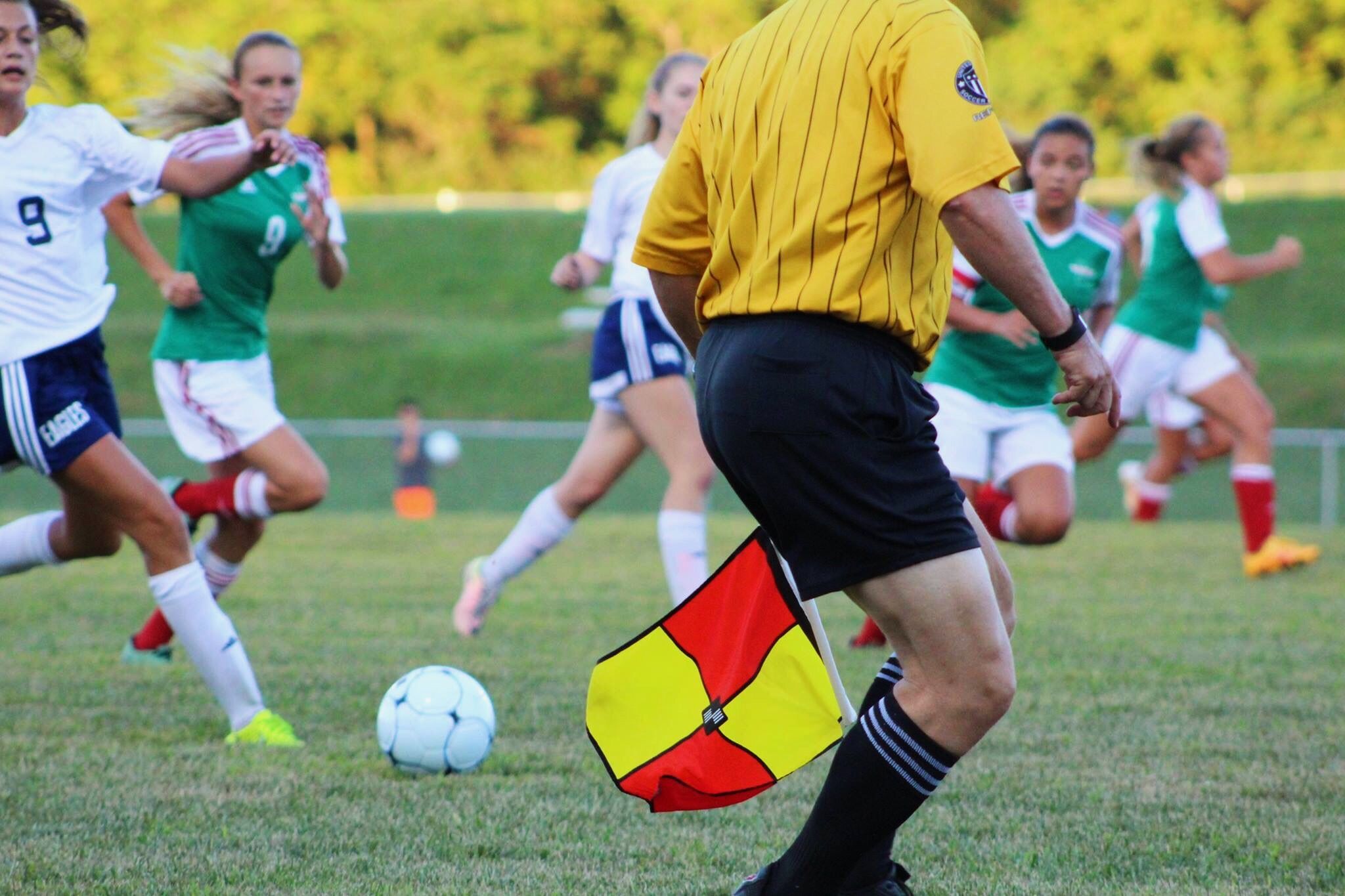
- The flag. The assistant referee on the sideline raises the flag the moment the ball is played to an offside player, but with VAR in the big leagues, they’ll often keep it down on close calls and let the play finish before reviewing. That delayed flag confuses everyone the first time.
- The freeze-frame. On tight calls, the broadcast draws lines across the pitch: attacker’s shoulder vs. defender’s foot. If any part of the attacker’s body they can score with is past the line, it’s offside. Armpits have decided goals.
- The trap. Watch the defensive line step forward in unison just as the pass is played, stranding the striker alone past them. When it works it’s brilliant; when one defender is a step slow, it’s a breakaway.
- The exceptions. You can’t be offside in your own half, and never from a goal kick, corner, or throw-in. When a player scores directly from a corner routine and nobody appeals, that’s why.
Say this out loud
- “Flags up he was past the last man.”
- “They’re playing the trap so watch the line step up.”
- “VAR’s checking it and his armpit was offside.”