What Is Forward Progress in Football?
The 30-second answer
Forward progress is the spot where a ball carrier’s forward momentum was stopped by the defense and that’s where the ball gets placed for the next play, even if the runner gets pushed backward after that. Once a defender stops you moving forward, the play is effectively over at the furthest point you reached. You don’t lose the ground you earned just because the tackle finished a few yards behind it.
The slightly longer version
Football is a game of inches, and forward progress is the rule that decides which inches count.
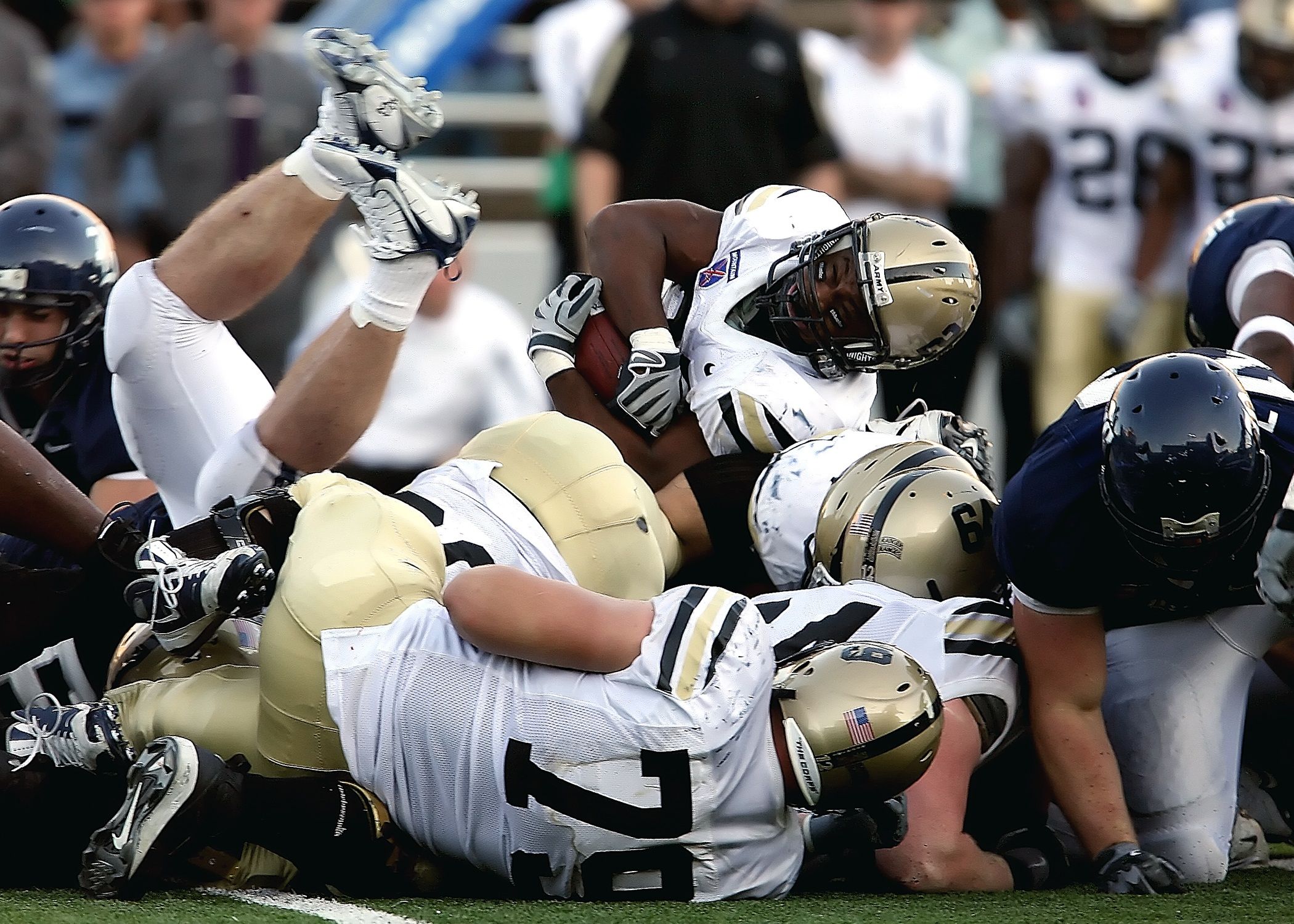
When a runner is tackled, he’s often driven backward, sometimes several yards, before he actually hits the ground. Without a forward progress rule, the ball would be spotted wherever the tackle ended and every runner would get punished for fighting through contact. So officials mark the ball at the most forward point the runner reached before his momentum was stopped. That’s the spot. Everything after it like the push-back and the pile sliding backward doesn’t count.
A few places this quietly decides games:
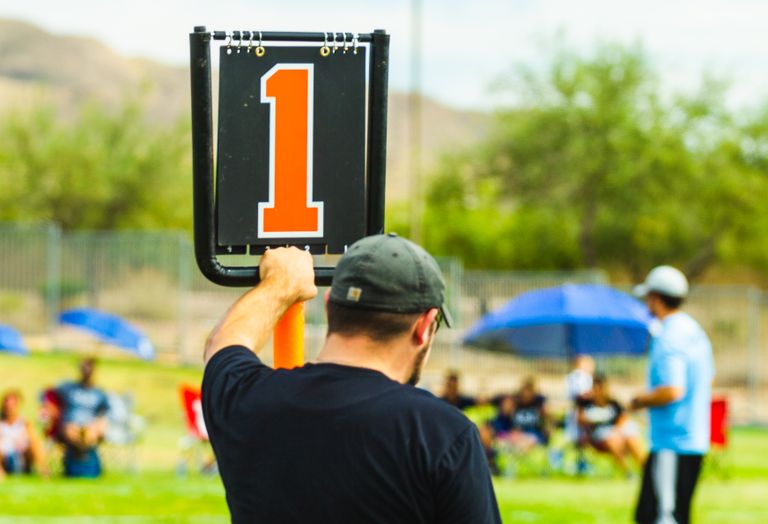
- First downs. The measurement isn’t where the runner landed; it’s where his forward progress ended. A runner who reaches the ball across the line to gain before being driven back has the first down.
- The goal line. If a runner’s progress carries the ball across the goal line and they are considered “breaking the plane” it’s a touchdown, even if he’s immediately shoved back out of the end zone.
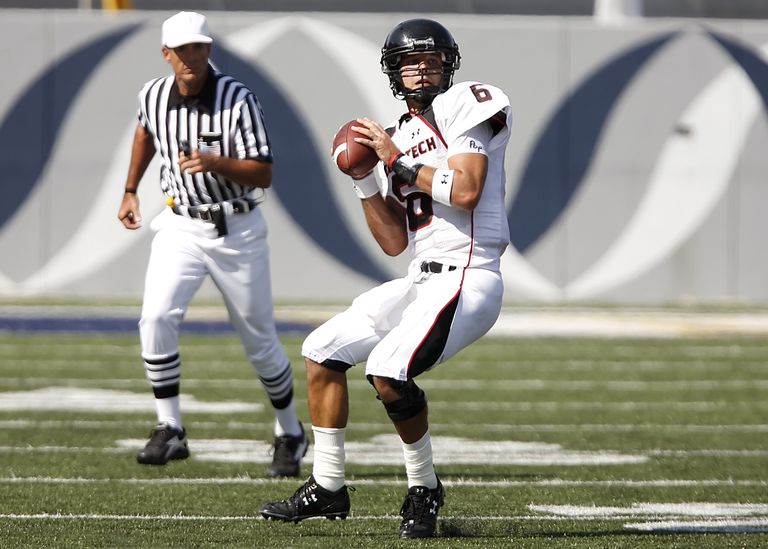
- Sacks. A quarterback’s forward progress matters too: if he’s hit, starts falling forward, and then gets driven back, the ball is spotted at the furthest point he reached, which can save a couple of yards on the stat sheet and the down.
- The sideline and the clock. This is the sneaky one. If a receiver catches the ball near the sideline and a defender drives him backward, officials can rule his forward progress was stopped in bounds, which means the play ends in bounds and the clock keeps running, even though the tackle finished out of bounds. Late in games, that’s the difference between having time for another play and watching the clock die.
One limit: the protection only covers ground the defense takes from you. If a runner voluntarily runs backward such as reversing field on his own, then there’s no forward progress safety net. Where he ends up is where the ball goes.
What to watch for:
- The stretch. A runner stretched across the line to gain and then yanked backward: watch where the officials spot the ball. It should be at the stretch, not the landing.
- The goal-line escape. A receiver driven back toward his own end zone: if his progress was stopped before the goal line, there’s no safety and the push-back into the end zone doesn’t count against him.
- The clock signal. A late-game catch near the sideline where the receiver gets driven back and out: if the referee signals the clock to keep running, that’s a forward-progress ruling and the catch effectively ended in bounds.
Say this out loud
“They mark it where his progress stopped, not where he landed and he got the first down before they pushed him back.”
“He broke the plane and the touchdown counts, even though they shoved him back out.”
“His progress was stopped in bounds, so the clock keeps running.”